
Your dog might be a lefty. Just as people often have a preferred hand, experiments have shown that dogs also have their own way of preferring a particular paw. Scientists term this canine lateralization, and it happens much more often than you might think it does.
It has been speculated that approximately 50% of dogs exhibit an obvious paw preference, with the remainder being ambidextrous. Testing your pup will take only a few minutes, and the results might surprise you. Here’s what science says about whether your furry friend is left or right-pawed.
How to Test Your Dog’s Paw Preference
The testing of canine lateralization is rather easy and fun, and you will have to observe your dog over several activities, not one particular action. Researchers suggest that at least 50-100 observations are required for a correct prediction, but you can start with 20-30 to observe a pattern.
Try the following:
- The Kong Test – Fill up the Kong toy with treats and watch which paw the dog will use to hold or steady it
- First Test – Observe the paw your dog uses when leading in a walk or going up stairs
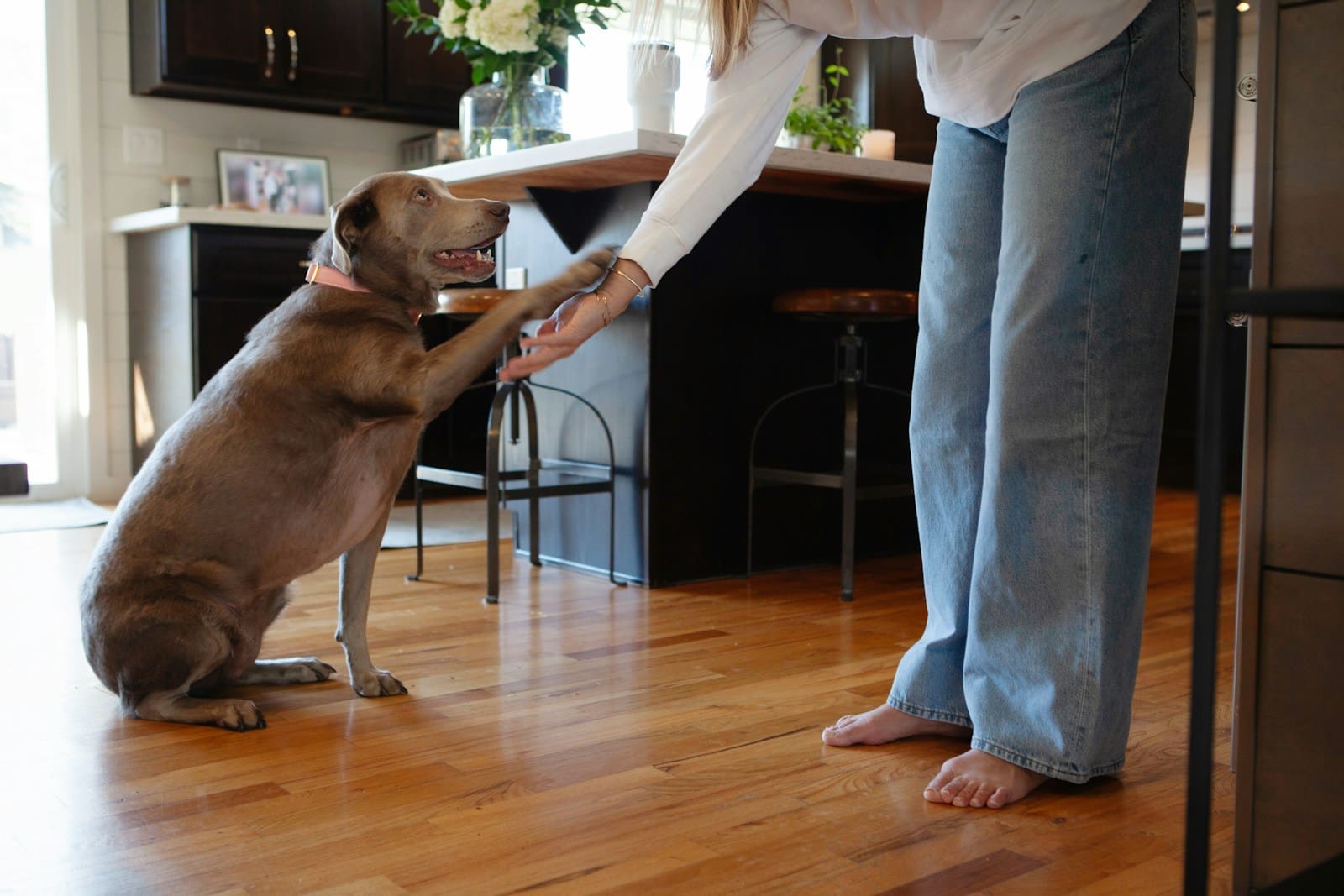
- Shake Hands – Ask your dog to “shake” and see which paw they naturally offer first
For example, studies led by Dr. Deborah Wells of Queen’s University Belfast demonstrated that male dogs were left-pawed, while females were right-pawed. Her experiments, similar to the Kong test, were simple yet prolonged over several weeks until apparent patterns emerged.
Read More: Can Dogs Get Tetanus?
What Paw Preference Reveals About Your Dog
Now, it is where it gets interesting: in canines, the paw dominance has to do with the hemisphere dominance of the brain, just like in human beings. A left-pawed dog tends to rely more on its right hemisphere, which processes emotions and stress responses, while right-pawed dogs exhibit left hemisphere dominance, associated with positive emotions and approach behaviors.
Researchers at the University of Lincoln found that left-pawed dogs were more reactive to stress and new situations, while right-pawed dogs generally made more optimistic responses when approaching a new environment. Ambidextrous dogs fell somewhere in between. Again, paw preference alone does not predict personality, but rather is one subtle indicator of many factors in your dog’s temperament and behavior.
Read More: How to Keep Dogs from Digging
Why Some Dogs Do Not Show Clear Preferences
Not all dogs fall strongly into one paw or the other. About 50% of dogs tend to be more ambidextrous with their paws, using either one depending on the task. This variability could even be a benefit. The nature of the task is also a factor. Simple actions, such as stepping forward, may not be as indicative as problem-solving ones, which involve object stabilization. Age, breed, and training can all be modifying factors, so repeated measures over diverse situations provide the best description.
Knowledge of dog paw preference is a fascinating look into your pet’s brain function and emotional processing. Whether your dog is left-pawed, right-pawed, or ambidextrous, each pattern correlates with how it views and responds to its world. Perform the basic tests described above at home and monitor your observations for several weeks.
You will find it provides real insight into what makes your dog tick while having fun in the process. Additionally, although these tissue types are found in all humans, there is a striking variation that exists from one individual to another.
Read More: Heatwave Safety for Dogs: What You Should Know